Sourdough Hydration Calculator: True Total Hydration & Baker's Math Tool
Stop baking slack, collapsed bread. Eliminate the hidden +3% water surge from active levain, calculate multi-flour absorption limits, and hit your ideal dough temperature in summer with exact water & crushed ice math.
SourdoughCalc's True Hydration Formula computes total dough hydration by dividing combined main water and starter water by combined main flour and starter flour: True Hydration (%) = [(W_main + W_levain) / (F_main + F_levain)] × 100. For a standard 900g loaf (450g flour, 315g water, 100g 100%-hydration levain), uncompensated levain raises apparent 70.0% hydration to 73.0% true hydration unless you subtract 15.0g of main water.
- True Hydration Equation
- (W_main + W_lev) / F_total
- 900g Loaf @ 70% Apparent
- 73.0% True (+3.0% Drift)
- Exact Water Correction
- -15.0g Main Water (300g)
- Ice Latent Heat Constant
- 80 cal/g (112 °F-Factor)
Boundary Caveat: Static hydration percentages ignore whole-grain bran absorption (+4% to +8% water retention) and ambient kitchen heat; use the interactive True Hydration, Reverse-Weight & DDT solver below to lock exact gram weights.
Artisan Sourdough Hydration & Dough Feel Calculator
Water percentage added to main dough
40% - 150% (50% Stiff / 100% Standard / 125% Liquid)
Salt tightens the gluten mesh and regulates fermentation rate.
Screen keep-awake • Step-by-step timer • Bulk Rise sync (282m)
</> Embed this Calculator on Your SiteFree Blogger & Forum Widget▼
Add this interactive True Total Hydration & DDT calculator to your baking blog, recipe card, or food science guide. Copy and paste the responsive HTML snippet below:
<iframe src="https://sourdoughcalc.app/embed" width="100%" height="520" style="border:1px solid #e5e7eb; border-radius:12px;" loading="lazy"></iframe> <p style="font-size:12px; color:#6b7280; text-align:right; margin-top:4px;"> Powered by <a href="https://sourdoughcalc.app/" target="_blank" rel="dofollow">SourdoughCalc – Free Sourdough Hydration & Fermentation Calculator</a> </p>
Specialized Artisan Calculators
Baker's Percentage Calculator
Index every ingredient to 100% total flour weight and reverse-scale any sourdough loaf size cleanly.
DDT & Crushed Ice Calculator
4-factor desired dough temperature solver with 80 cal/g latent heat crushed ice substitution for summer bakes.
Starter Feeding Ratio Tool
Zero-waste levain builder for 1:1:1, 1:2:2, and 1:5:5 inoculation ratios with exact seed starter weights.
Bulk Fermentation & Aliquot Matrix
Predict exact target rise percentage (30% vs 75%) based on dough thermal carryover and vessel geometry.
Sourdough Discard Substitution Tool
Substitute unfed starter into any pancake, muffin, or cracker recipe with exact flour & liquid deductions.
Yeast ↔ Sourdough Converter
Bidirectional converter between Instant/Active Dry Yeast and Sourdough Starter with 100% hydration lock.
Baking Schedule & Reverse Clock
Reverse-engineer all 9 fermentation stages from your target Sunday bake hour with 1-click .ics calendar alarms.
Sourdough Crumb Doctor
Forensic crumb diagnostic engine for underproofed Fool's Crumb, sloped-bowl overproofing, and gummy centers.
Why 80% of Sourdough Recipes Collapse at High Hydration
The Fatal Blindspot of "Apparent Hydration"
When a legacy calculator asks for 450g of flour and 315g of water, it records your hydration as 70.0%. It treats the subsequent addition of 100g of active levain as an inert afterthought.
However, standard 100% hydration levain is exactly 50g of flour and 50g of water. The moment you fold your starter into the autolysed dough, your real system totals become:
The Biochemical Consequence
In artisanal bread making, hydration does not follow a linear sensory curve. Passing 72% hydration with standard grocery bread flour exceeds the molecular holding capacity of the glutenin proteins:
- Free Water Pool: The excess 3% exists as unbound free water, lubricating the gluten chains and causing lateral dough spreading (puddling) upon turn-out.
- Accelerated Proteolysis: Higher moisture accelerates bacterial protease motility, breaking down the peptide bridges before oven spring can take hold.
- SourdoughCalc Fix: Our algorithm reverse-calculates from raw dough weight, isolating starter flour from main flour to lock your target hydration with surgical precision.
Sourdough Hydration Calculator & Dough Hydration Calculator Benchmark: Apparent 70% vs. True Total Hydration (Sourdough Calculator Table)
| Target Raw Dough | Main Flour | 70% Apparent Water | Active Levain (20%) | True Total Hydration | Corrected Water for True 70.0% |
|---|---|---|---|---|---|
| 500g Small Boule | 256g | 179g | 51g (25.5g F + 25.5g W) | 72.6% (+2.6%) | 171.5g (-7.5g) |
| 750g Medium Batard | 384g | 269g | 77g (38.5g F + 38.5g W) | 72.8% (+2.8%) | 257.3g (-11.7g) |
| 900g Artisan Standard | 450g | 315g | 100g (50.0g F + 50.0g W) | 73.0% (+3.0%) | 300.0g (-15.0g) |
| 1000g Large Miche | 512g | 358g | 102g (51.0g F + 51.0g W) | 72.6% (+2.6%) | 343.1g (-14.9g) |
Browse exact gram tables for 300g–1,000g flour weights, 15 commercial flour brands, and fermentation temperature schedules.
32 Tested Sourdough Recipes with Interactive Gram Scaling
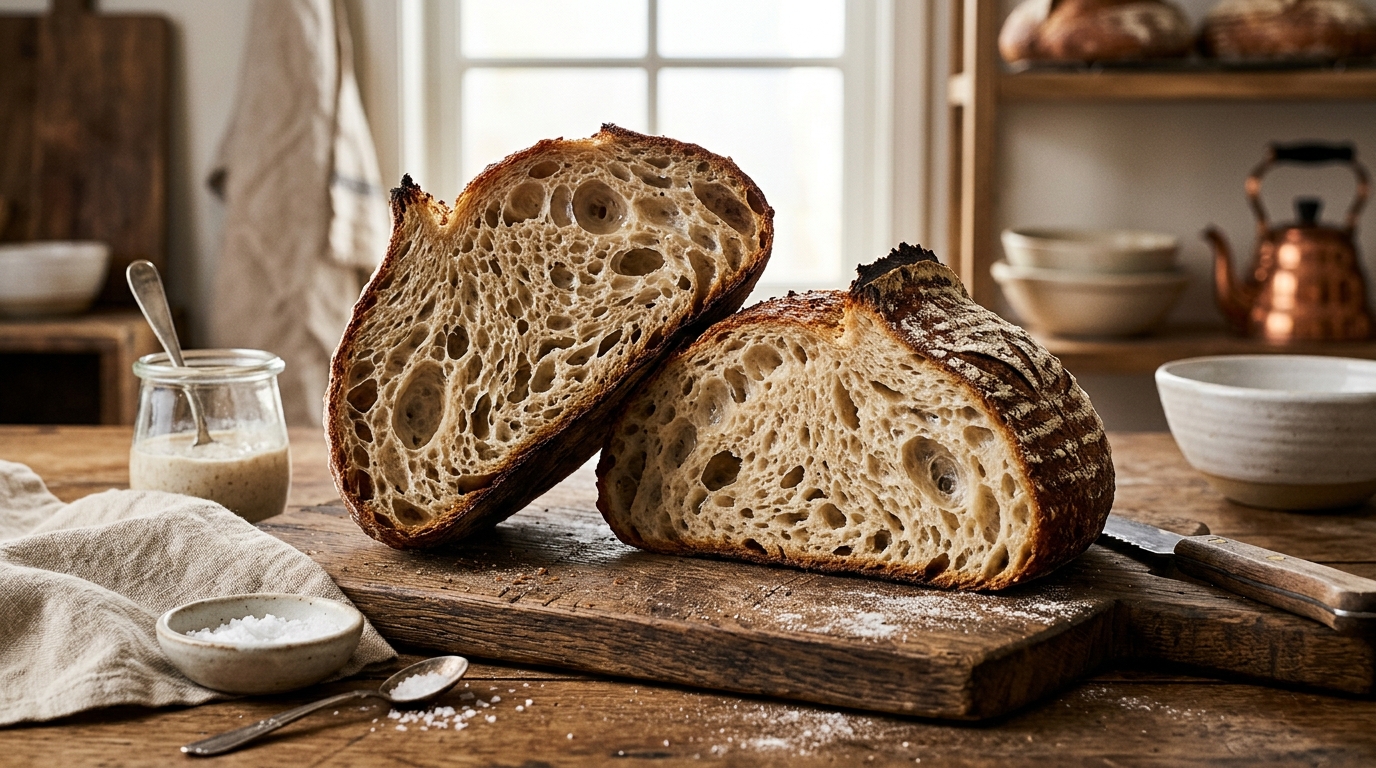
Classic Tartine Country Loaf
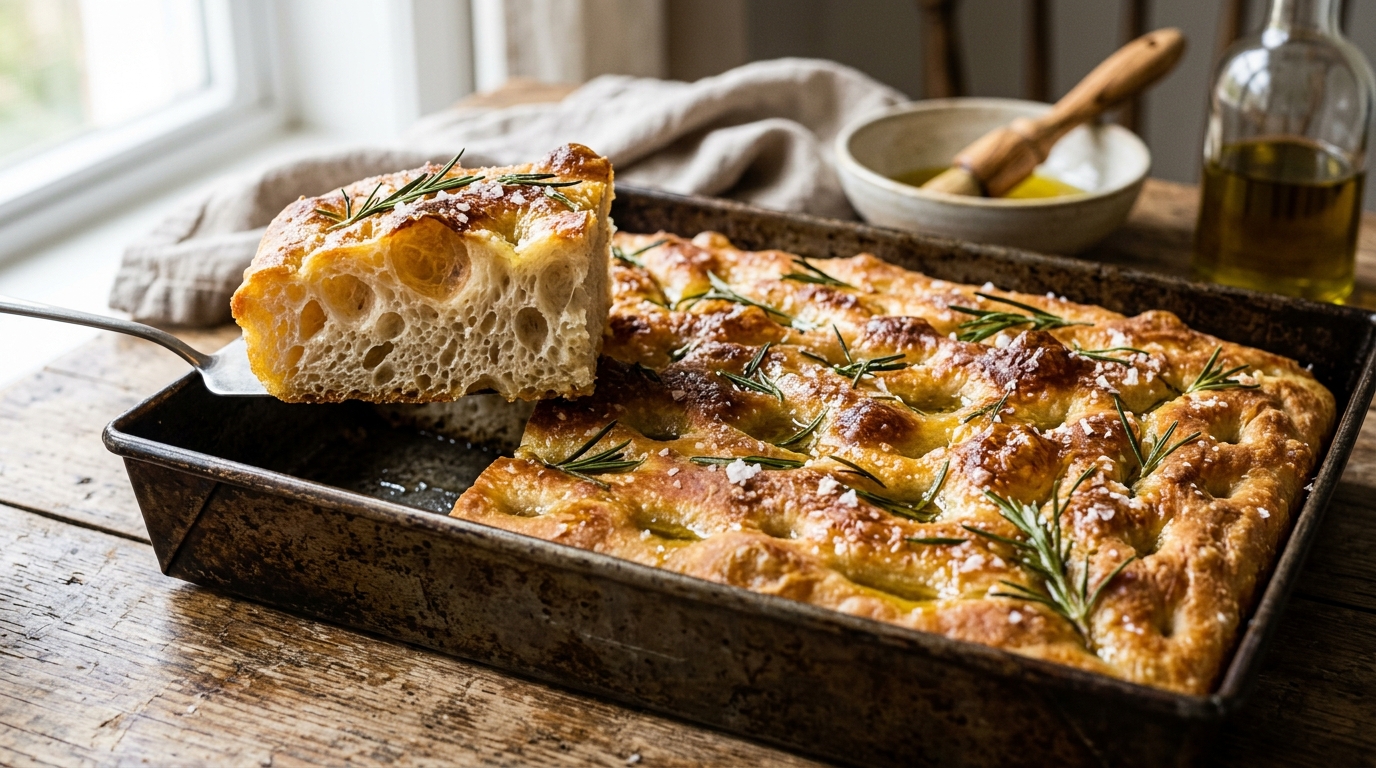
High-Hydration Artisan Sourdough Focaccia
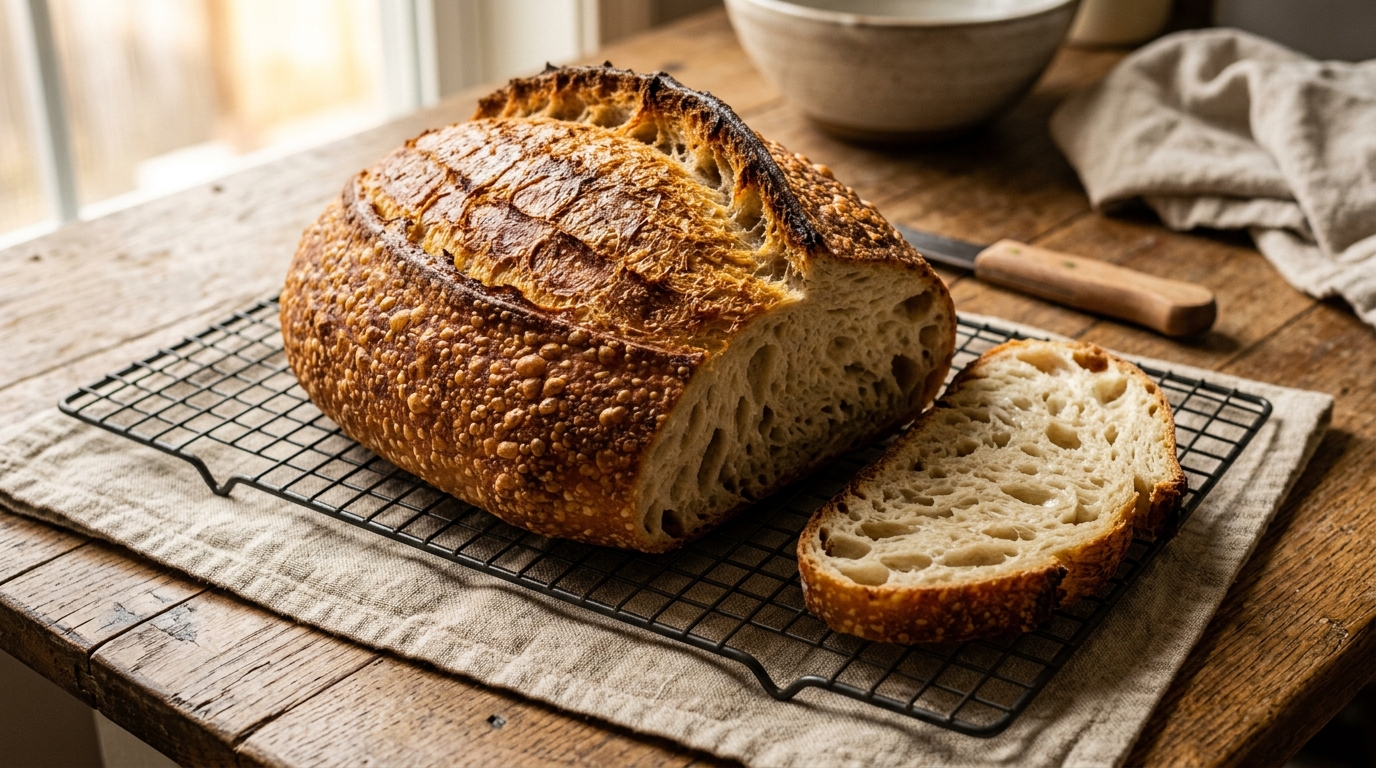
Authentic Tangy San Francisco Sourdough
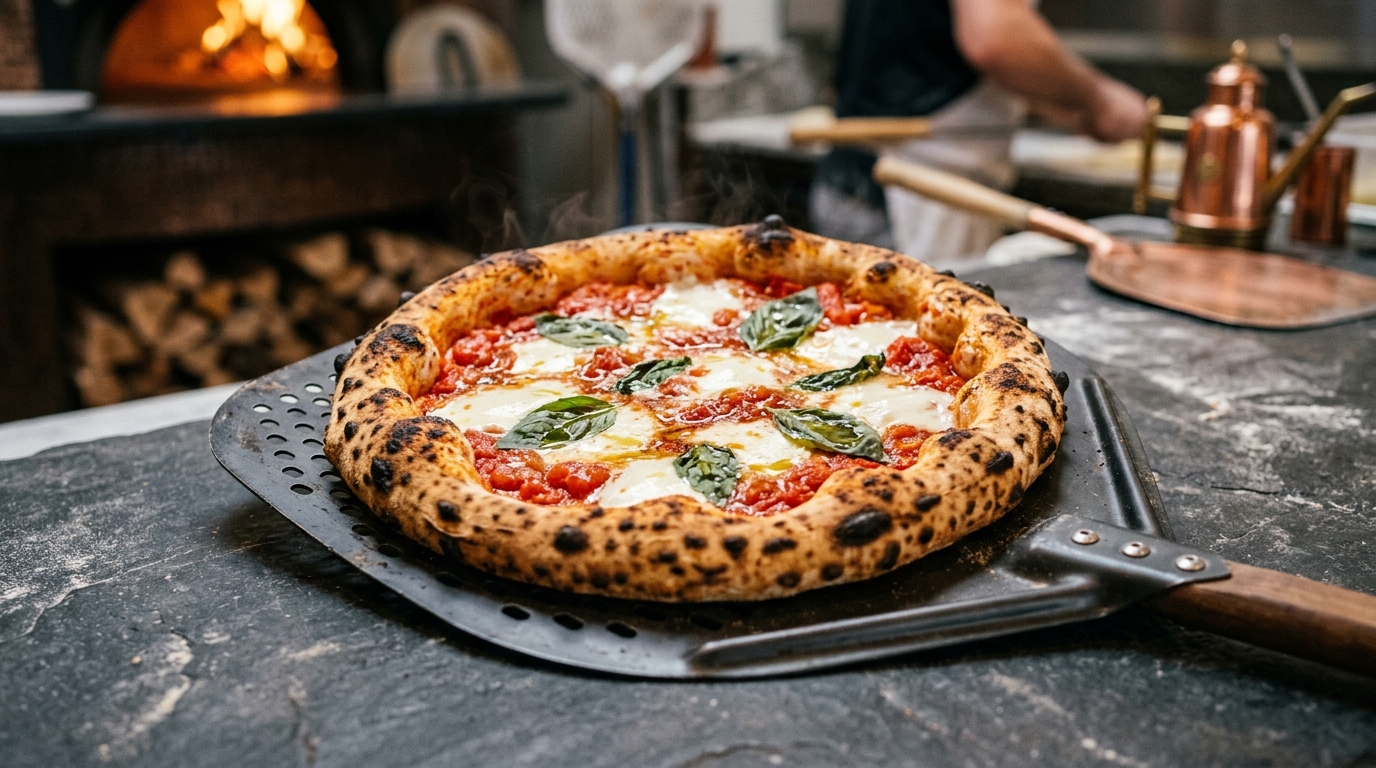
Artisan Neapolitan Sourdough Pizza Crust
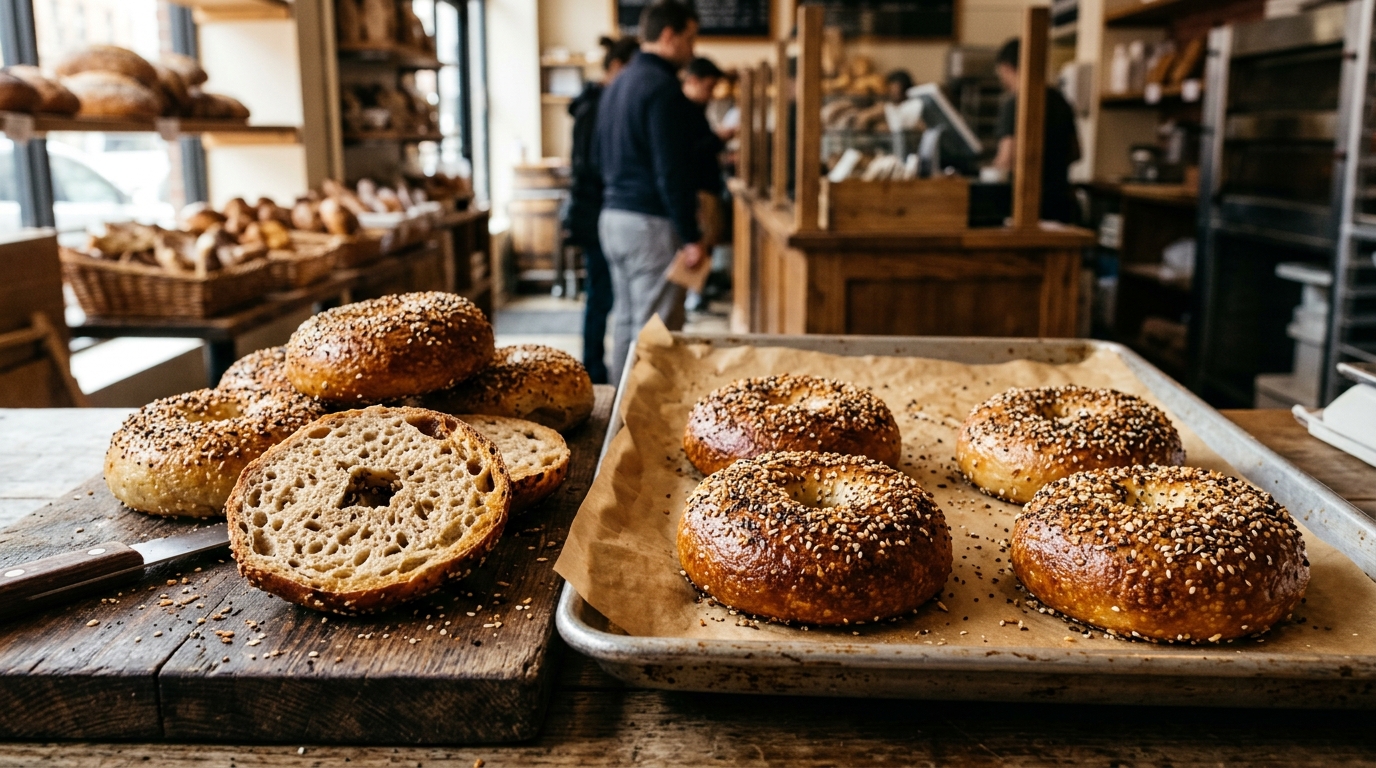
Artisan New York Sourdough Bagels
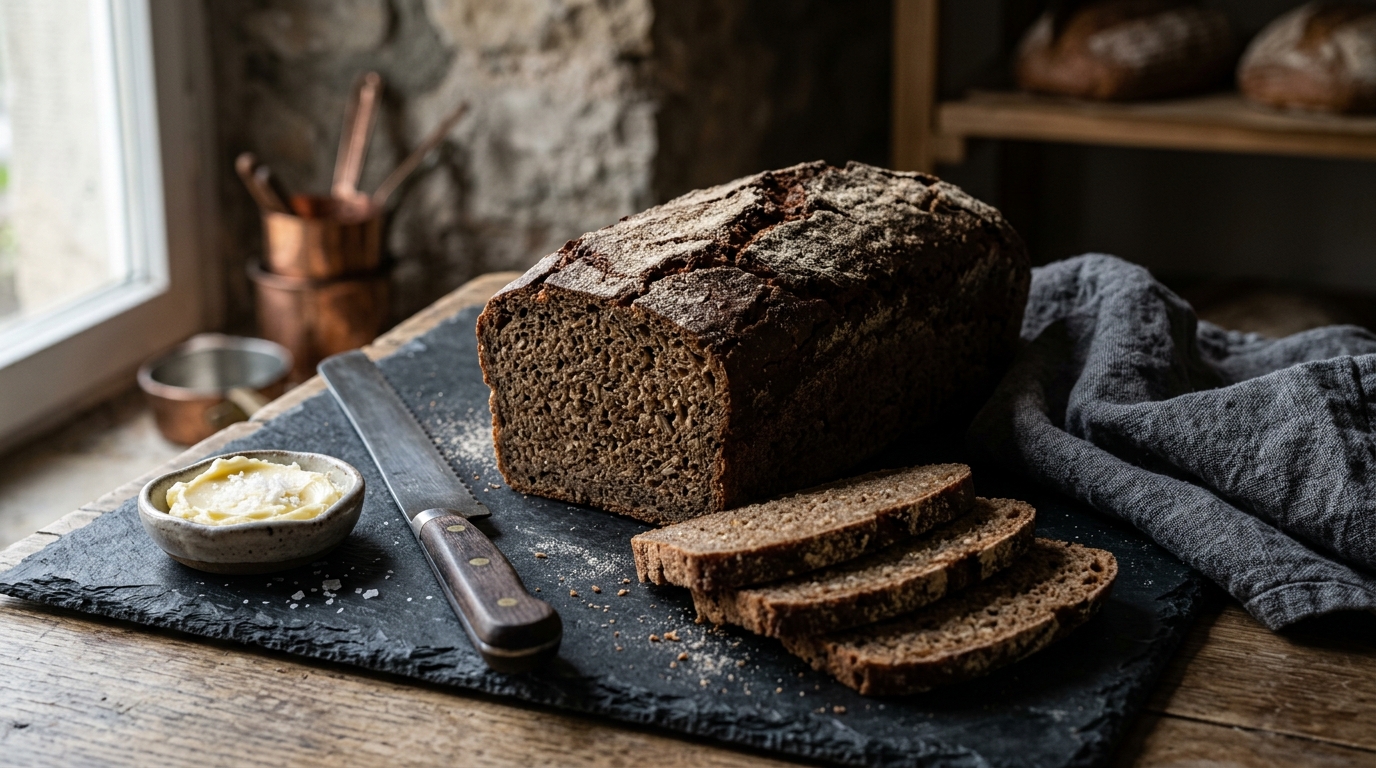
Traditional 100% Whole Rye Sourdough Bread
Flour Water Absorption & Protein Comparison Chart
Empirical holding capacity and gluten elasticity ceilings across common milling standards
| Flour Variety | Protein % | Primary Absorption Mechanism | Baseline Hydr. | Max Hydro-Ceiling | Standard Brand Benchmarks |
|---|---|---|---|---|---|
| Hard Red Bread Flour | 12.7% - 14.0% | High glutenin-to-gliadin ratio; dense disulfide bond cross-linking | 65% - 72% | 82% | King Arthur Bread Flour, Central Milling Artisan Craft |
| Stoneground Whole Wheat | 13.5% - 14.5% | Insoluble dietary fiber & bran pericarp micro-sponge absorption | 80% - 85% | 92% | Bob's Red Mill Organic Whole Wheat, King Arthur Traditional Whole Wheat |
| Dark Rye Flour (Type 1740) | 9.0% - 11.5% | Arabinoxylans (pentosans) forming high-viscosity hydrocolloids | 90% - 100% | 110% | Hodgson Mill Dark Rye, Bob's Red Mill Dark Rye |
| Unbleached All-Purpose | 10.5% - 11.7% | Moderate gluten matrix; prone to proteolytic slackening if over-hydrated | 60% - 66% | 72% | King Arthur Unbleached AP, Gold Medal Better for Bread |
| Whole Spelt (Triticum spelta) | 13.0% - 14.5% | High gliadin (high extensibility, lower elasticity); absorbs quickly but slackens | 64% - 70% | 76% | Arrowhead Mills Organic Spelt, Bob's Red Mill |
| Durum Semolina Rimacinata | 12.0% - 13.5% | Coarse crystalline endosperm; yellow carotenoid pigments with steady water uptake | 68% - 74% | 80% | Caputo Semola Rimacinata, Molino Grassi |
The Artisan Baker's Essential Hardware Toolkit
Reliable sourdough starts with accurate hydration math, but finishes with thermal steam retention and knife-edge scoring. Here is the verified hardware standard.
Lodge Cast Iron Double Dutch Oven (5-Quart 2-in-1 Pot & Skillet Lid)
5-quart cast iron 2-in-1 pot and versatile 10.25-inch skillet lid that locks in baking steam for maximum oven spring.
Saint Germain 9-Inch Round Rattan Banneton Basket with Linen Liner
100% natural Indonesian rattan cane proofing basket with washable linen liner that wicks surface moisture during cold retardation.
Baker of Seville Patented 2-in-1 Stainless Steel Bread Lame
All-metal dual-mode scoring tool that switches between curved and straight razor angles for clean 30-degree sourdough ears.
Fuzion 3000g / 0.1g Precision Digital Kitchen Gram Scale
0.1g high-precision digital food scale for micro-measuring 2.0% salt, starter inoculation, and hydration water splits.
Deep-Dive Sourdough Baking Guides & Masterclasses
How to Calculate Sourdough Hydration with Starter (True Total Hydration Chart)
Most bakers believe they are baking at 70% hydration, only to find their dough slack, sticky, and unable to hold tension. The culprit is 'Apparent Hydration'—the amateur omission of the water already contained within your starter.
Sourdough Flour Absorption Chart: King Arthur vs. Bob's Red Mill Max Hydration Tested
Not all flours absorb water equally. A blend with 15% Whole Wheat and 5% Dark Rye behaves radically differently than pure unbleached bread flour. Here are the lab-tested absorption benchmarks.
Autolyse vs. Fermentolyse for Sourdough: When and Why to Hold Back Your Levain
Invented by Professor Raymond Calvel, the autolyse stage hydrates starch and activates amylase without acid-induced gluten tightening. Here is when to use pure autolyse versus fermentolyse.
Desired Dough Temperature (DDT) Formula: Sourdough Water Temp & Ice Chart
Temperature is your recipe's most potent ingredient. An increase of just 5°F doubles fermentation kinetics. Learn how professional bakers use thermodynamic ice calculations to guarantee consistent 76°F bulk fermentation.
Why Is My Sourdough Dough So Sticky? (75%–80% Hydration Fixes)
Social media has convinced home bakers that 80%+ hydration is the only hallmark of artisan mastery. In reality, high hydration without gluten development leads to flat, gummy frisbees.
Baker's Percentage & Baker's Math Explained: How to Scale Any Sourdough Recipe
In Baker's Math, total flour is always 100%. Master this simple universal language of commercial baking to scale recipes from a single loaf to an entire commercial production run.
Sourdough Bulk Fermentation Temperature & Percentage Rise Chart (Open Crumb Guide)
The ubiquitous advice to 'let dough rise until doubled (100%)' is the #1 reason warm-kitchen bakes collapse. Learn the inverse relationship between dough temperature and target bulk volume rise.
9 Best Sourdough Calculators Tested in 2026: Free Baker's Math & Hydration Apps
Why do 7 out of 9 online sourdough calculators produce overly sticky dough? We audited the top sourdough hydration, DDT, and baker's percentage calculators in 2026 across 8 food-physics criteria.
Sourdough Baking Schedule & Reverse Timeline Guide: Weekend, Workday & Same-Day Clocks
A formula tells you what to mix, never when to start. Work backwards from the slice, scale every stage by your dough temperature, and lock in all nine stages with clock-time tables for Sunday morning, workday evening and same-day bakes.
Underproofed vs. Overproofed Sourdough Crumb Chart: How to Read Your Loaf (Fool's Crumb Fix)
A dense base with cavernous tunnels on top is not a shaping problem — it is severe underproofing. A collapsed ragged loaf is acid-catalysed glutenolysis. Here is how to tell them apart and what to change.
How to Convert Instant or Active Dry Yeast to Sourdough Starter (1 Packet = 100g Chart)
A packet of yeast is not the same thing as a levain, but they are interchangeable on a gram scale. The trap is that 100g of starter carries 50g of flour and 50g of water that must be deducted from the main dough.
Sourdough Starter Feeding Ratios Explained: 1:1:1 vs. 1:2:2 vs. 1:5:5 Peak Time & Acidity Chart
The ratio you feed at controls three things at once: how fast the culture peaks, how much of the previous batch's acid carries forward, and how much flour you waste. Here is the full comparison, plus a zero-discard method.
How to Add Sourdough Discard to Any Recipe: Flour, Liquid & Baking Soda Subtraction Chart
Discard is not a free ingredient. Every 100g you add smuggles in flour, water and acid, and the acid is what makes your pancakes taste great — until you forget to neutralise it.
Tangzhong & Yudane Sourdough Science: How Starch Gelatinization Makes Soft Brioche, Shokupan & Cinnamon Rolls
Enriched dough fails for one reason: fat added too early. Understand the cooking step that keeps milk bread soft for five days and the fermentation compensation high sugar and butter demand.
Frequently Asked Sourdough Hydration Questions
Common mechanical pitfalls, starter moisture dynamics, and temperature management
What is the difference between Apparent Hydration and True Total Hydration?
Apparent hydration only considers the water directly poured into the mixing bowl divided by the main flour weight. True Total Hydration accounts for the water and flour inside your active starter. Since standard starter is 50% water, your actual dough is consistently 2.7% to 3.0% wetter than apparent formulas indicate.
Why should I use crushed ice in my water during summer bakes?
Wild yeasts double twice as fast when room temperature climbs over 80°F (27°C). To prevent dough from overproofing and turning sour/gummy, you need water colder than tap water. Crushed ice absorbs 80 cal/g of heat during phase change, safely dropping dough temperature to the optimal 76°F DDT without changing hydration ratios.
Can I substitute All-Purpose flour 1:1 for Bread Flour?
No. All-Purpose flour has 10.5% to 11.5% protein and a maximum safe hydration ceiling of 68-70%. Bread flour (12.7% to 14.0% protein) can easily support 75-80% hydration. If using All-Purpose flour, reduce target hydration in SourdoughCalc to 64-66% to prevent dough slackening.
Why does SourdoughCalc split water into Autolyse and Bassinage?
Holding back 10% of recipe water (the French *bassinage* method) allows full enzymatic hydration of the flour during initial autolyse. The reserved water is later used to dissolve the salt, ensuring even dispersion without dehydrating the gluten network prematurely.
Sourdough Bread Calories, Protein & Loaf Cost Breakdown
Nutrition and Ingredient Cost Per 100g, Slice & 900g Loaf
| Serving / Reference Portion | Calories (kcal) | Carbs (g) | Protein (g) | Fat (g) | Homemade Ingredient + Bake Energy Cost ($ USD) |
|---|---|---|---|---|---|
| 50g Standard Slice | 130 | 25.0 | 4.3 | 0.6 | $0.08 |
| 100g Baked Crumb | 260 | 50.0 | 8.5 | 1.2 | $0.15 |
| 454g (1 Pound Loaf) | 1,180 | 227.0 | 38.6 | 5.4 | $0.68 |
| 900g Country Boule | 2,340 | 450.0 | 76.5 | 10.8 | $1.35 |
| 100g Active 100% Starter | 95 | 19.0 | 3.7 | 0.3 | $0.12 |
Every figure here derives from ingredient-level food science. Unbleached bread flour carries 3.64 kcal/g of metabolizable energy, so a fully baked 900g country boule delivers roughly 2,340 kcal across ten generous slices, while the lactic and acetic acids from a long organic fermentation lower sourdough's glycemic index to about 54 — noticeably gentler on blood sugar than a comparable yeasted white loaf at the same energy density. The cost column tells the other half of the story: flour, salt, and oven energy put a homemade 900g boule at roughly $1.35 in ingredients, versus about $10.00 for an equivalent artisan loaf at a retail bakery. Because our multi-flour blend re-weights bread flour, whole wheat, rye, and spelt in real time, the same math tracks gluten protein (a 12.7%–13.5% target) alongside calories, and the hydration guide below explains how water ratio — not guesswork — governs both texture and slice weight.