High-Hydration Artisan Sourdough Focaccia
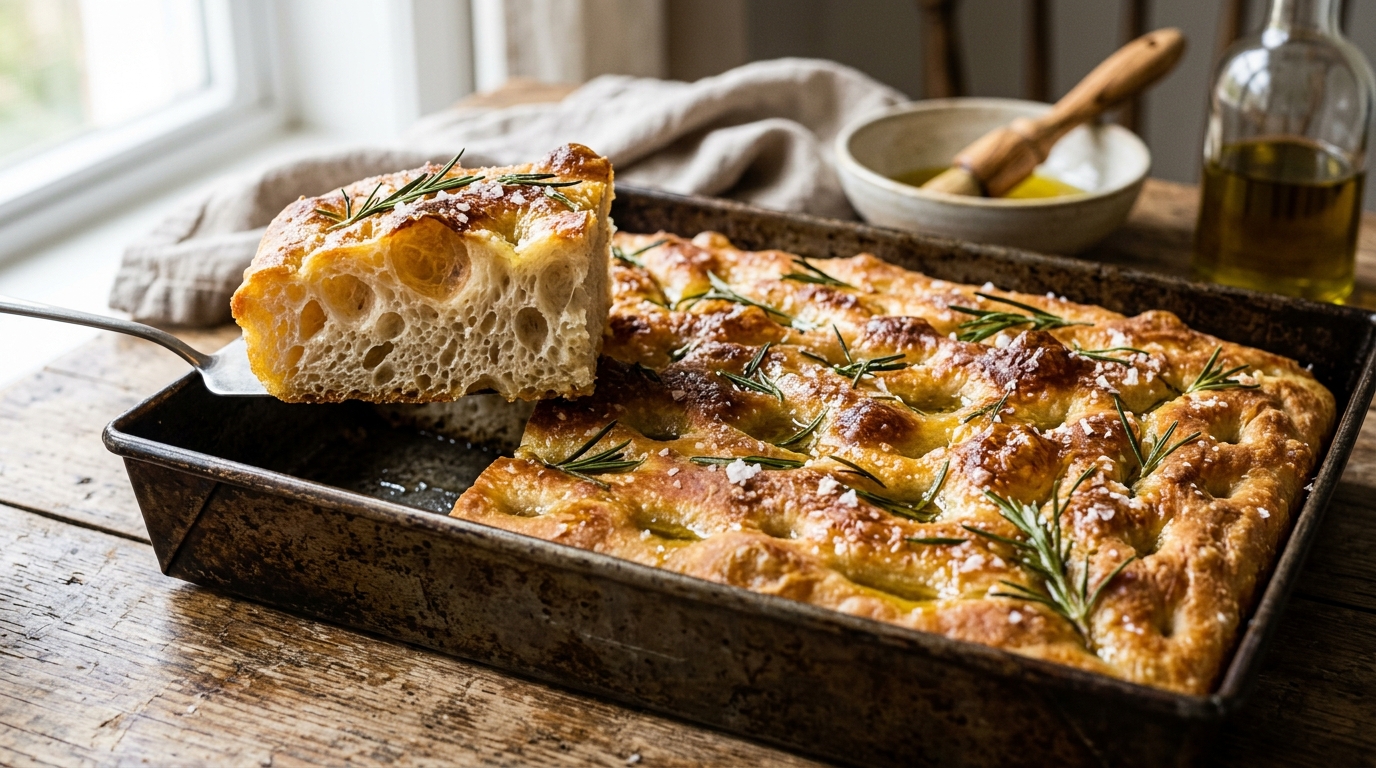
Shatteringly crisp golden crust with pillowy, olive-oil-drenched crumb
Artisan Sourdough Focaccia Baker's Formula & Timing At A Glance
Artisan sourdough focaccia is crafted at 82% apparent hydration (reaching 84.5% true total hydration), with 85% high-protein bread flour, 15% whole wheat or semolina, 20% active sourdough starter, 2.2% fine sea salt, and 5% extra virgin olive oil in the dough mix. Proved for 4 hours at room temperature followed by an optional overnight cold retard or 3-hour warm pan proof until billowing with gas, then dimpled with wet-oiled fingers and baked at 425°F–450°F (220°C–232°C) in an oiled pan for 25–30 minutes.
- Apparent Hydration
- 82.0%
- True Total Hydration
- 84.5% (+2.5% starter)
- Flour Composition
- 85% Bread / 15% Semolina
- Levain Ratio
- 20.0% (100% hydration)
- Olive Oil Ratio
- 5.0% inside dough + 40g pan pool
- Proofing Style
- Pan Proof until jiggly & full of air
- Bake Setup
- 450°F (232°C) 25–30 mins in dark metal sheet pan
Boundary Caveat: Static gram weights for High-Hydration Artisan Sourdough Focaccia assume 1 Half-Sheet Pan (972g) at 82% apparent hydration (83.6% true hydration with 20% levain); if your pan volume, loaf count, or starter hydration differs from 100%, use the interactive gram scaler below to rebalance main flour and water automatically.
Dough Rheology & Handling Dynamics
Physics of gluten hydration, elasticity, and tackinessWith 84.5% total water and 5% olive oil, the dough matrix acts as a semi-viscous fluid foam. Gluten is developed through time and coil folds in a glass dish rather than intensive kneading. The oil coats gluten proteins, creating a melt-in-the-mouth, tender crumb that resists staling.
Exact Gram Weights & Baker's Math
Base batch scaled for 1 Half-Sheet Pan (972g). Main flour indexed to 100.0%.
| Ingredient | Weight (g) | Baker's % |
|---|---|---|
| High-Gluten Bread Flour (12.7%+) | 377g | 85.1% |
| Semolina Rimacinata or Whole Wheat | 66g | 14.9% |
| Water (Autolyse Phase) | 334g | 75.4% |
| Water (Bassinage / Salt Phase) | 29g | 6.5% |
| Active Levain (100% Hydration) | 89g | 20.0% |
| Fine Sea Salt | 9.7g | 2.2% |
| Extra Virgin Olive Oil (in dough) | 23g | 5.0% |
| Extra Virgin Olive Oil (pan & dimpling) | 40g | 8.5% |
| Flaky Sea Salt & Fresh Rosemary | 5g | 1.0% |
| True Total Hydration (Free Dough) | 83.6% | +1.6% vs Apparent |
Interactive Recipe Calculator & Live Timer
Adjust loaf weight, change hydration, or launch the kitchen keep-awake baking companion.
Artisan Sourdough Hydration & Dough Feel Calculator
Water percentage added to main dough
40% - 150% (50% Stiff / 100% Standard / 125% Liquid)
Salt tightens the gluten mesh and regulates fermentation rate.
Screen keep-awake • Step-by-step timer • Bulk Rise sync (282m)
</> Embed this Calculator on Your SiteFree Blogger & Forum Widget▼
Add this interactive True Total Hydration & DDT calculator to your baking blog, recipe card, or food science guide. Copy and paste the responsive HTML snippet below:
<iframe src="https://sourdoughcalc.app/embed" width="100%" height="520" style="border:1px solid #e5e7eb; border-radius:12px;" loading="lazy"></iframe> <p style="font-size:12px; color:#6b7280; text-align:right; margin-top:4px;"> Powered by <a href="https://sourdoughcalc.app/" target="_blank" rel="dofollow">SourdoughCalc – Free Sourdough Hydration & Fermentation Calculator</a> </p>
Step-by-Step Artisan Method
Carefully curated instructions designed for consistency, oven spring, and blistering.
Levain Build
Phase: Levain BuildFeed starter at 1:1:1 or 1:2:2 ratio with warm water (80°F / 27°C). Allow to rise until doubled or tripled in size with a bubbly dome.
Autolyse & Hydration
Phase: AutolyseMix bread flour, semolina flour, and 92% of the formula water in a bowl. Rest 45 minutes.
Incorporate Starter, Salt, Bassinage & Oil
Phase: MixingAdd the active levain, 2.2% sea salt, reserved bassinage water, and 5% extra virgin olive oil. Squeeze and fold until the oil is completely emulsified into the dough.
Coil Folds & Tension Building
Phase: Coil FoldsPerform 3 sets of coil folds in the bowl at 40-minute intervals using wet hands. Lift the center until ends tuck underneath.
Pan Transfer & Overnight Cold Proof
Phase: Pan ProofingPour 30g of olive oil into a 9x13 or half-sheet baking pan. Gently tip dough into the center. Do not force it to the corners. Cover and chill in the refrigerator for 8–18 hours (or room temp proof for 3–4 hours).
Final Warm Proof, Dimpling & Brine
Phase: Dimpling & ToppingBring pan to room temperature (75°F–80°F) for 2–3 hours until puffy and jiggly. Drizzle with 15g olive oil and warm brine water. Press fingertips firmly down to the pan bottom to dimple. Scatter fresh rosemary and flaky sea salt.
High-Heat Crisp Bake
Phase: BakeBake on the lowest oven rack at 450°F (232°C) for 25–30 minutes until the top is deeply golden brown and the bottom crust sizzles and lifts easily from the pan.
Artisan Baker's Golden Rules for this Recipe
Dark Metal Sheet Pan: Use an anodized aluminum or blue steel baking pan (like LloydPans 9x13 or half-sheet). Light shiny pans reflect heat and result in soggy, pale bottoms.
The Olive Oil Pool: Do not skimp on the pan oil. Focaccia is fundamentally fried on the bottom surface during baking, creating that legendary glass-crisp exterior.
Brine Water Emulsion (Salmoia): Whisk 2 tbsp warm water with 1 tbsp olive oil and pour over the dough before dimpling. The water prevents the surface from drying out while deep craters form.
Fingertip Dimpling Technique: Spread your fingers wide and press straight down until your pads touch the cold metal bottom of the pan. Never pinch or tear bubbles.
Frequently Asked Questions & Troubleshooting
Q:How do I keep my high-hydration focaccia from sticking to the baking pan?
Two golden rules: 1) Use a well-seasoned nonstick pan, anodized aluminum, or blue steel pan, or line standard pans with parchment paper under the olive oil; 2) Ensure you pour at least 30–40g of olive oil into the pan. The dough literally fries in the oil, making sticking impossible.
Q:Why do you use a brine emulsion (water + oil) before dimpling?
In traditional Ligurian focaccia (Focaccia Genovese), the brine creates pockets of silky, custard-like texture in the dimple valleys while the ridges bake into crisp, crackly peaks. Pure oil alone often evaporates or burns fresh herb leaves.
Q:Can I make this focaccia same-day without the overnight cold retard?
Yes! After transferring dough to the oiled pan, let it proof in a warm spot (78°F–82°F) for 3.5 to 4.5 hours until it fills the pan, bubbles vigorously, and wobbles like Jell-O when gently nudged. Dimple and bake immediately.
Q:What flour is best for sourdough focaccia?
High-protein unbleached bread flour (12.7%–14% protein) is essential to hold the 84.5% True Total Hydration. Adding 15% semolina rimacinata (durum wheat) provides an irresistible golden color and nutty flavor profile.
Plan & Troubleshoot This High-Hydration Artisan Sourdough Focaccia Bake
9-Stage Baking Schedule & Reverse Clock
Reverse-engineer feeding, autolyse, folding, and cold retard times from your target bake hour, then export the full High-Hydration Artisan Sourdough Focaccia timeline as .ics phone calendar alarms.
Fool's Crumb & Sourdough Crumb Doctor Diagnostic
Seeing giant tunneling holes surrounded by dense, gummy dough? Diagnose underproofed Fool's Crumb, proteolytic collapse (overproofing), or hydration overshoot in this 82% dough before your next bake.
Related Artisan Sourdough Recipes
Authentic Tangy San Francisco Sourdough
Same-Day 8-Hour Sourdough Country Bread
Fluffy Pull-Apart Sourdough Dinner Rolls
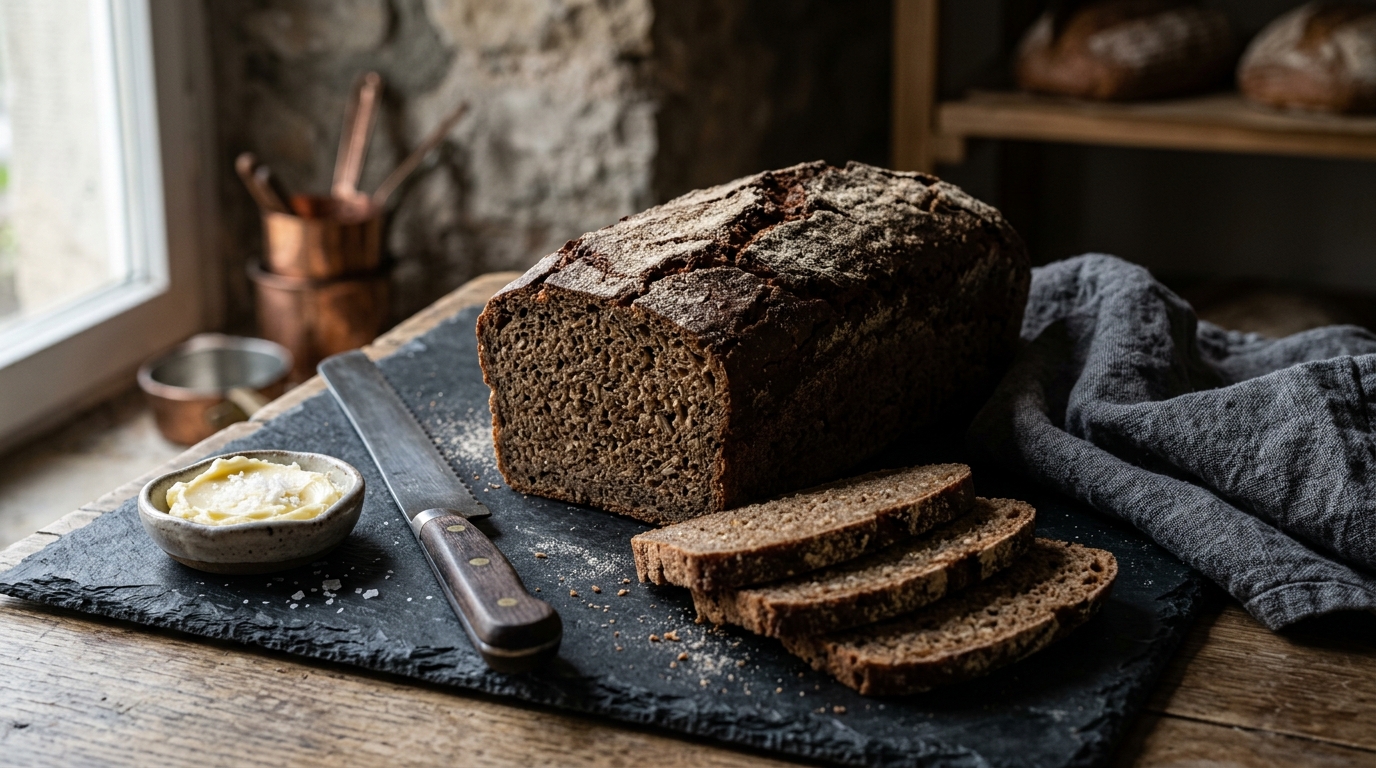
Traditional 100% Whole Rye Sourdough Bread
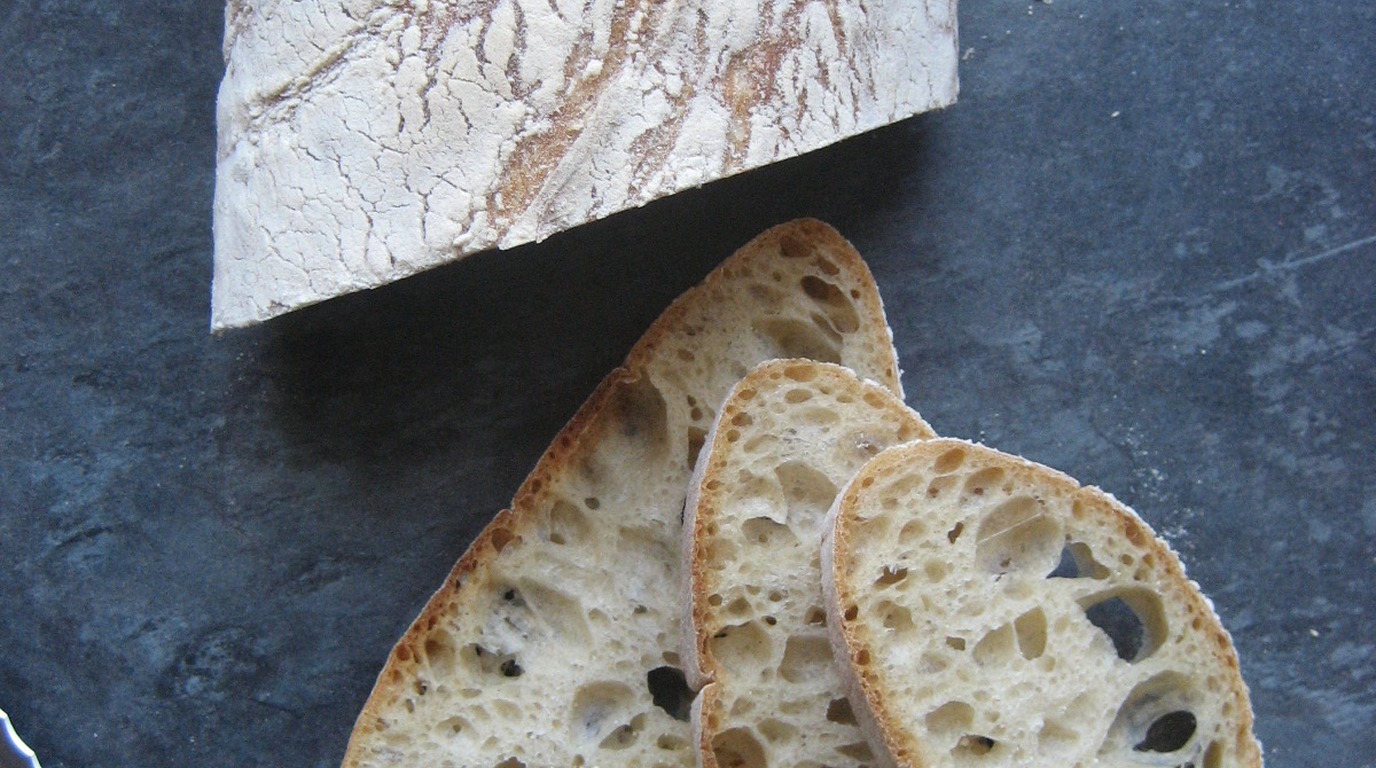
84% High-Hydration Italian Sourdough Ciabatta

Honey Stoneground Whole Wheat Sourdough Loaf
Explore More Tested Formulas by Dough Architecture
Matching Baker's Math Reference Guides
Why Is My King Arthur Bread Flour Sourdough So Sticky at 82% Hydration? (Max Water Limit & Fix)
How Long to Bulk Ferment Sourdough at 75 Degrees (75°F / 24°C) — 20% Starter Chart
Warm Weather 78 Degrees (78°F / 26°C) Sourdough Bulk Fermentation: 20% Starter Cutoff Chart
Compare Sourdough Calculators for This Formula
BreadCalc Alternative & Modern Modernization
Outdated non-responsive UI, no temperature/DDT control, and zero fermentation timing companion.
Omni Calculator Sourdough Module Alternative
Generic multi-purpose widget with ad-heavy UI, lacks artisan cereal rheology and fermentation timers.
The Perfect Loaf Calculator Comparison & Alternative
Interactive scaling features require paid membership; no latent-heat crushed ice compensation.
Deep-Dive Baking Science & Masterclasses
Desired Dough Temperature (DDT) Formula: Sourdough Water Temp & Ice Chart
Temperature is your recipe's most potent ingredient. An increase of just 5°F doubles fermentation kinetics. Learn how professional bakers use thermodynamic ice calculations to guarantee consistent 76°F bulk fermentation.
Why Is My Sourdough Dough So Sticky? (75%–80% Hydration Fixes)
Social media has convinced home bakers that 80%+ hydration is the only hallmark of artisan mastery. In reality, high hydration without gluten development leads to flat, gummy frisbees.
Baker's Percentage & Baker's Math Explained: How to Scale Any Sourdough Recipe
In Baker's Math, total flour is always 100%. Master this simple universal language of commercial baking to scale recipes from a single loaf to an entire commercial production run.
High-Hydration Artisan Sourdough Focaccia Equipment & Baker's Arsenal
Mastering this high-hydration artisan sourdough focaccia formula requires calibrated thermal transfer and specialized tools. Here is the verified hardware standard.
Silpat Premium Non-Stick Silicone Baking Mat (Half-Sheet)
Fiberglass-reinforced food-grade silicone liner that prevents boiled bagels, lye-dipped pretzels, and enriched rolls from sticking.
Fuzion 3000g / 0.1g High-Precision Digital Kitchen Baker's Scale
High-precision 0.1g digital gram scale for weighing exact hydration water splits, starter inoculation, and salt percentages.
ThermoPro TP19H Waterproof Instant-Read Digital Dough Thermometer
Ultra-fast 1-second digital thermocouple probe for verifying Desired Dough Temperature (78°F) and internal starch gelatinization (205°F–210°F).
Saint Germain 9-Inch Natural Rattan Banneton Proofing Basket with Liner
Handwoven natural Indonesian rattan proofing basket with linen liner that wicks away surface moisture during overnight cold retardation.