Japanese Yudane Milk Bread Sourdough Shokupan
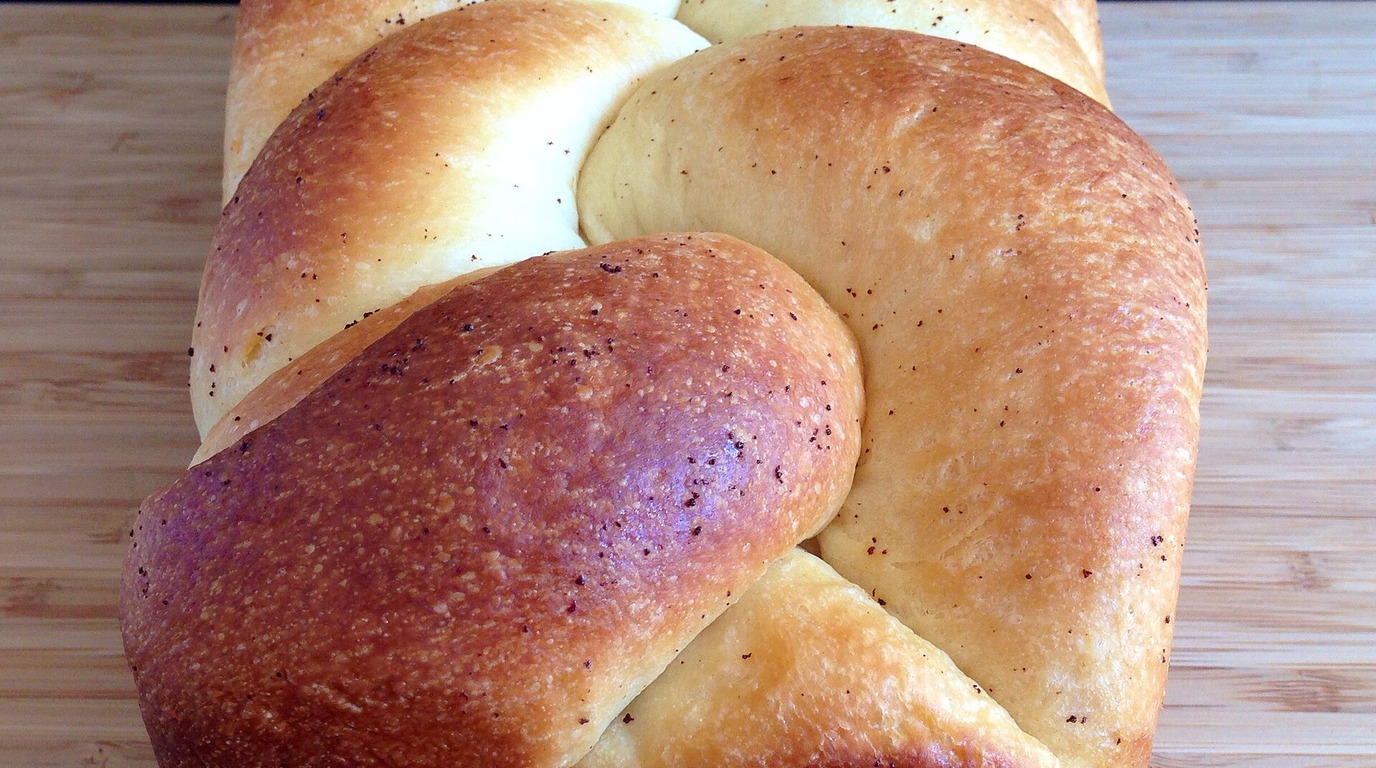
Cloud-soft, snow-white Japanese sourdough Pullman loaf using a 1:1 boiling water Yudane scald for dramatic vertical shred
Japanese Yudane Milk Bread Sourdough Shokupan Baker's Formula & Schedule At A Glance
The Japanese Yudane Milk Bread Sourdough Shokupan is formulated at 72.0% apparent hydration (yielding 74.5% true total hydration once starter water and flour are factored in), featuring 100% High-Protein Unbleached Bread Flour, 20% active 100%-hydration levain, and 1.9% fine sea salt. Bulk fermented at 78°F–80°F (26°C–27°C) for 4 hours until 70% risen, followed by 2.5–3.0 hours at 80°F until dough reaches 85% of Pullman pan height, and baked at 375°F (190°C) in Pullman Loaf Pan for 32–36 minutes until 200°F core.
- Apparent Hydration
- 72.0%
- True Total Hydration
- 74.5% (+2.5% starter)
- Flour Composition
- 100% High-Protein Unbleached Bread Flour
- Levain Inoculation
- 20.0% (100% hydration)
- Bulk Fermentation
- 78°F–80°F (26°C–27°C) for 4 hours until 70% risen
- Proofing Schedule
- 2.5–3.0 hours at 80°F until dough reaches 85% of Pullman pan height
- Bake Profile
- 375°F (190°C) in Pullman Loaf Pan for 32–36 minutes until 200°F core
Boundary Caveat: Static gram weights for Japanese Yudane Milk Bread Sourdough Shokupan assume 1 Tall Pullman Loaf (1016g) at 72% apparent hydration (74.5% true hydration with 20% levain); if your pan volume, loaf count, or starter hydration differs from 100%, use the interactive gram scaler below to rebalance main flour and water automatically.
Dough Rheology & Handling Dynamics
Physics of gluten hydration, elasticity, and tackinessScalding 20% of the flour with boiling water (Yudane) locks free water inside retrograded starch granules. Consequently, a 72% apparent (74.9% true) hydration dough handles like a firm 62% dough on the bench while releasing bound steam during baking for unmatched moisture retention.
Exact Gram Weights & Baker's Math
Base batch scaled for 1 Tall Pullman Loaf (1016g). Main flour indexed to 100.0%.
| Ingredient | Weight (g) | Baker's % |
|---|---|---|
| High-Protein Unbleached Bread Flour (13.0%+) | 474g | 100.0% |
| Water (Autolyse Phase) | 290g | 61.2% |
| Water (Bassinage / Salt Phase) | 51g | 10.8% |
| Active Levain (100% Hydration) | 95g | 20.0% |
| Fine Sea Salt | 9g | 1.9% |
| Heavy Cream & Whole Milk Powder Enrichment | 35g | 7.5% |
| Unsalted Cultured Butter | 32g | 7.0% |
| Cane Sugar or Condensed Milk | 30g | 6.5% |
| True Total Hydration (Free Dough) | 74.5% | +2.5% vs Apparent |
Interactive Recipe Calculator & Live Timer
Adjust loaf weight, change hydration, or launch the kitchen keep-awake baking companion.
Artisan Sourdough Hydration & Dough Feel Calculator
Water percentage added to main dough
40% - 150% (50% Stiff / 100% Standard / 125% Liquid)
Salt tightens the gluten mesh and regulates fermentation rate.
Screen keep-awake • Step-by-step timer • Bulk Rise sync (282m)
</> Embed this Calculator on Your SiteFree Blogger & Forum Widget▼
Add this interactive True Total Hydration & DDT calculator to your baking blog, recipe card, or food science guide. Copy and paste the responsive HTML snippet below:
<iframe src="https://sourdoughcalc.app/embed" width="100%" height="520" style="border:1px solid #e5e7eb; border-radius:12px;" loading="lazy"></iframe> <p style="font-size:12px; color:#6b7280; text-align:right; margin-top:4px;"> Powered by <a href="https://sourdoughcalc.app/" target="_blank" rel="dofollow">SourdoughCalc – Free Sourdough Hydration & Fermentation Calculator</a> </p>
Step-by-Step Artisan Method
Carefully curated instructions designed for consistency, oven spring, and blistering.
Build Active Sourdough Levain
Phase: Levain BuildMix 1 part mature sourdough starter with 2 parts lukewarm water (78°F / 26°C) and 2 parts unbleached flour to yield at least 95g active levain (20% inoculation). Ferment for 4–5 hours until doubled, domed, and buoyant.
Enzymatic Autolyse & Hydration
Phase: AutolyseCombine the 474g total flour blend (100% High-Protein Unbleached Bread Flour) with 290g filtered water (85% of formula water) in a broad mixing bowl. Mix until zero dry flour remains, cover, and rest for 45 minutes.
Incorporate Levain, Salt & Enrichments
Phase: Mixing & BassinageDimple 95g active levain, 9.0g fine sea salt (1.9%), and the reserved 51g bassinage water into the autolysed dough. Work using the Rubaud method or stand mixer for 4–6 minutes until smooth, incorporating any recipe enrichments.
Bulk Fermentation & Strength Folds
Phase: Bulk FermentationFerment at 78°F–80°F (26°C–27°C) for 4 hours until 70% risen. Perform 3 to 4 sets of stretch-and-folds or gentle coil folds spaced 30–40 minutes apart during the first 2 hours, laminating any solid inclusions at the second fold.
Portioning, Pre-Shaping & Final Shaping
Phase: ShapingTurn the aerated dough onto the work surface to yield 1 Tall Pullman Loaf (920g) (1 × 920g). Pre-shape gently, allow a 20-minute bench rest for gluten relaxation, then execute final shaping with taut surface skin tension.
Final Proofing & Cold Retardation
Phase: Proofing & RetardProof according to schedule: 2.5–3.0 hours at 80°F until dough reaches 85% of Pullman pan height. Cold retardation at 38°F (3°C) slows yeast respiration while lactobacilli synthesize complex organic flavor compounds and organic acids.
Artisan Bake & Internal Cooling Cure
Phase: Bake & CureBake at 375°F (190°C) in Pullman Loaf Pan for 32–36 minutes until 200°F core. Remove onto a wire cooling rack immediately after baking so bottom steam escapes cleanly, and allow starches to set before slicing.
Artisan Baker's Golden Rules for this Recipe
Account for True Total Hydration (74.5%): Because a 100%-hydration levain at 20% inoculation contributes equal parts water and flour, your true dough hydration is 2.5% higher than the 72.0% apparent water ratio.
Respect Desired Dough Temperature (DDT): Target 76°F–78°F (25°C–26°C) right after mixing so wild yeast and heterofermentative lactobacilli stay in optimal metabolic balance during 78°F–80°F (26°C–27°C) for 4 hours until 70% risen.
Master the Handling Protocol: Double-Roll Coiled Barrel Shaping Protocol: Divide dough into 3 equal balls, roll each into a long tongue, fold the left and right thirds inward, and roll tightly into 3 barrels placed side-by-side in the Pullman tin to align gluten fibers vertically.
Verify Thermal Doneness: Bake at 375°F (190°C) in Pullman Loaf Pan for 32–36 minutes until 200°F core and always confirm core starch gelatinization with an instant-read thermometer before cooling on a wire rack.
Frequently Asked Questions & Troubleshooting
Q:What is the difference between 72.0% apparent hydration and 74.5% true hydration in this Japanese Yudane Milk Bread Sourdough Shokupan?
Apparent hydration (72.0%) only divides formula water (341g) by main flour (474g). True total hydration (74.5%) includes the 48g water and 48g flour inside your 95g sourdough levain, reflecting the real physical moisture of the dough.
Q:How can I scale this Japanese Yudane Milk Bread Sourdough Shokupan formula for multiple loaves or different pan sizes?
Use the live Baker's Percentage Calculator above: adjust Target Loaf Count or Target Unit Weight (default 1 × 920g = 920g batch) and every flour, water, levain, and salt gram weight recalculates automatically while preserving 72.0% hydration.
Q:Why does my dough feel stickier than expected during bulk fermentation?
Scalding 20% of the flour with boiling water (Yudane) locks free water inside retrograded starch granules. Consequently, a 72% apparent (74.9% true) hydration dough handles like a firm 62% dough on the bench while releasing bound steam during baking for unmatched moisture retention. Ensure your flour meets the recommended protein spec and keep your hands lightly damp or oiled rather than adding raw bench flour.
Q:Can I cold-retard this dough longer in the refrigerator for deeper sourdough tang?
Yes! Keeping your refrigerator calibrated between 36°F and 38°F (2°C–3°C) puts wild Saccharomyces yeast into dormancy while lactic acid bacteria continue producing organic acids for up to 16–24 hours.
Plan & Troubleshoot This Japanese Yudane Milk Bread Sourdough Shokupan Bake
9-Stage Baking Schedule & Reverse Clock
Reverse-engineer feeding, autolyse, folding, and cold retard times from your target bake hour, then export the full Japanese Yudane Milk Bread Sourdough Shokupan timeline as .ics phone calendar alarms.
Crumb Doctor & Fermentation Diagnostic
Diagnose dense Fool's Crumb (underproofing), proteolytic collapse (overproofing), or hydration overshoot in this 72% dough before your next bake.
Related Artisan Sourdough Recipes
88% Ultra-High-Hydration Glass Bread (Pan de Cristal)
Roasted Garlic & Fresh Rosemary Sourdough Boule
High-Hydration Artisan Sourdough Focaccia
Crispy French T65 Sourdough Baguettes de Tradition
Cinnamon Raisin Swirl Sourdough Breakfast Loaf
Same-Day 8-Hour Sourdough Country Bread
Matching Baker's Math Reference Guides
500g Flour at 72% Hydration Sourdough Recipe (346g Water & 100g Starter — True 72% Formula)
450g Flour at 72% Hydration Sourdough Recipe (311g Water & 90g Starter — True 72% Formula)
Best Hydration for King Arthur Bread Flour Sourdough: 72% Sweet-Spot Recipe & Max Water Limit
Best Hydration for Bob's Red Mill Bread Flour Sourdough: 72% Sweet-Spot Recipe & Max Water Limit
Convert 100g Sourdough Starter (100% Hydration) to Instant, Active Dry & Fresh Yeast
1:2:2 (1 2 2) Sourdough Starter Ratio for 90g: Feeding Chart & Peak Rise Time
Zero-Waste Sourdough Discard Companion Guides (Wave 6)
100g Sourdough Discard Fluffy Buttermilk Pancakes Recipe & Conversion (Subtract 50g Flour & 50g Liquid)
Subtract Recipe Flour: -50g
Use Up 200g Sourdough Discard in Crispy Discard Pan Pizza Crust: High-Discard Recipe & Conversion Chart
Subtract Recipe Flour: -100g
Small-Batch 40g Sourdough Discard Rosemary Olive Oil Discard Crackers Recipe & Conversion (-20g Flour / -20g Liquid)
Subtract Recipe Flour: -20g
Thermodynamic Water Temperature & Ice Guides (Wave 7)
Sourdough Water Temperature for a 74°F (23°C) Room — Hand Mixing (75°F Target DDT) DDT Calculator
Required Water Temp: 76°F (24.4°C)
Winter Sourdough Water Temp for a Cold 64°F (18°C) Kitchen (Stand Mixer Low Speed (78°F DDT) DDT Chart)
Required Water Temp: 112°F (44.4°C)
What Water Temp for Sourdough in a 84°F (29°C) Kitchen? (Spiral Mixer (76°F Artisan DDT) & Summer Ice Chart)
Required Water Temp: 34°F (1.1°C)
Compare Sourdough Calculators for This Formula
The Sourdough Journey Bulk Fermentation Chart Digital Tool
Static PDF format requires manual chart lookup and cannot correct for conical mixing bowl geometry.
Rise Sourdough App Alternative: Free Web & Mobile Tool
Requires paid subscription ($29.99/yr), app store installation, and lacks edge-case thermodynamic physics.
King Arthur Baker's Percentage Guide Alternative & Interactive Tool
Static text articles require manual pen-and-paper math; no automatic recipe scaling or ice DDT.
Deep-Dive Baking Science & Masterclasses
Tangzhong & Yudane Sourdough Science: How Starch Gelatinization Makes Soft Brioche, Shokupan & Cinnamon Rolls
Enriched dough fails for one reason: fat added too early. Understand the cooking step that keeps milk bread soft for five days and the fermentation compensation high sugar and butter demand.
Why Is My Sourdough Dough So Sticky? (75%–80% Hydration Fixes)
Social media has convinced home bakers that 80%+ hydration is the only hallmark of artisan mastery. In reality, high hydration without gluten development leads to flat, gummy frisbees.
Baker's Percentage & Baker's Math Explained: How to Scale Any Sourdough Recipe
In Baker's Math, total flour is always 100%. Master this simple universal language of commercial baking to scale recipes from a single loaf to an entire commercial production run.
Japanese Yudane Milk Bread Sourdough Shokupan Equipment & Baker's Arsenal
Mastering this japanese yudane milk bread sourdough shokupan formula requires calibrated thermal transfer and specialized tools. Here is the verified hardware standard.
USA Pan Bakeware 9x4x4-Inch Aluminized Steel Pullman Loaf Pan with Lid
Heavy-gauge corrugated aluminized steel 9x4x4-inch Pullman loaf pan with sliding steam-trap lid for 100% rye Roggenbrot, Shokupan, and sandwich loaves.
ThermoPro TP19H Waterproof Instant-Read Digital Dough Thermometer
Ultra-fast 1-second digital thermocouple probe for verifying Desired Dough Temperature (78°F) and internal starch gelatinization (205°F–210°F).
Fuzion 3000g / 0.1g High-Precision Digital Kitchen Baker's Scale
High-precision 0.1g digital gram scale for weighing exact hydration water splits, starter inoculation, and salt percentages.
Silpat Premium Non-Stick Silicone Baking Mat (Half-Sheet)
Fiberglass-reinforced food-grade silicone liner that prevents boiled bagels, lye-dipped pretzels, and enriched rolls from sticking.